Find Amazing and Interesting Flower Wallpaper also All Information about flower from the world for flower lovers.
Tuesday, May 1, 2012
Monday, April 30, 2012
Dandelion flowers pictures.
The dandelion flower is recognizable to just about everyone.This is due to the fact that although these small plants are native to Europe and Asia,at least two of their species can be found growing wild all around the world. 
The dandelion flower is a member of the asteraceae family and, as is common with other members of this line, has a single head that is composed of several smaller, yellow ray flowers. The foliage for this flower is generally lobed, dark green and hairless. The distinctive lance shape of the leaves were the inspiration for its name � the Old French dent-de-lion, which means lion�s tooth. The stems of these flowers are hollow and, when broken, seep a thick, faintly white sap.
Since the entire dandelion flower is perfectly edible, many people over time have used this plant for both culinary and medicinal purposes. When dried and steeped in hot water, these flowers can make a superb diuretic, and are also thought to help in eliminating kidney stones. The milky sap is considered very effective with skin conditions, and can aid in diminishing warts.
Two contradictory superstitions state that if you blow on the dried flower ball, the number of seeds that remain can either tell you how many children you will have, or how many more years you will live. If all of the seeds come off, however, you will be granted a wish. In folk myths, the dandelion has been used to tell time and predict the weather. In these stories, the number of times it takes you to blow away all of the seeds from a single flower is the exact hour of the day. The weather, on the other hand, is dependent upon whether or not the head of the flower opens in the morning.
The flower heads can be eaten uncooked in salads or mixed with vegetables, and the roots may be dried and brewed as a substitute for coffee. There are also many myths and superstitions surrounding the dandelion flower.
As a symbol, the dandelion flower is the ultimate emblem for persistence and a strong will. It is also thought to represent wishes coming true, cheerful love, and general happiness. As a gift, these small, delicate flowers are certainly unique. Although uncommon, it is possible to give these to someone as a potted plant; however, they are best given freshly clipped and presented as a single yellow flower, so as to represent a sweet, innocent affection; or in its more downy form, encouraging the recipient to make a wish.
The plant has the botanical name of Taraxacum officinale. It represents a genus consisting of biennial and perennial herbs and plants. Originating from Southern Europe, the plant is the member of the family Composite.
Its name was got from the French word �dent de lion�, referring to the pointed leaves looking like a lion's tooth.
Dandelion bears yellowish or orange blooms that look like daisy. These tiny blossoms are gathered together into a complex flower head with the diameter of 2-5 cm. It opens at day hours and closes at night time.
The heads are produced individually on a hollow stem that may grow from 4 to 75 cm above the foliage. The plant�s leaves� length is 5-25 cm. depending on the species they can be plain or basal, entire or toothed.
Young plant's foliage is one of the ingredients for salads and soups. Its flower heads are utilized for wine making. One can get tasty beverage by drying and roasting the dandelion�s roots. Dandelion also serves as a tonic herb.
Sunday, April 29, 2012
Miniature roses pictures.
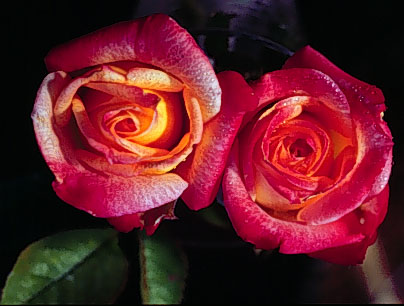
Miniature roses first became popular during the 1800s, then were almost forgotten. Lately, their popularity has been growing rapidly. They are now among the most commonly hybridized of all roses.
Uses for miniature rose: Their small size makes miniature roses ideal for edging, mass plantings, and rock or herb gardens. They are ideal container plants and the only roses truly useful as house plants.
Description of miniature rose:Since miniature roses are available in so many different forms, defining them is difficult. Even their height is deceptive: While truly tiny miniatures rarely reach more than 6 inches, many other "miniatures" eventually grow to 3 feet. The major characteristic of this group is a combination of small flowers on thin stems and diminutive foliage. Generally speaking, they either remain or can easily be maintained at less than 18 inches in height. Their flowers can be simple, semi-double, or double; clustered or single; fragrant or odourless. They have as wide a color range as any class of rose and more growth forms, from shrubby to creeping to climbing, than any other. Most are ever blooming.
Planting miniature rose: Spacing will depend on the eventual size of the variety chosen; 10 to 18 inches is usually adequate.Propagating miniature rose: Miniature roses are readily reproduced by cuttings.
Varieties of miniature rose: Cinderella, white; Holy Toledo, copper; Lavender Jewel, lavender; Starina, orange red.
Special needs for miniature rose: Miniature roses are probably the hardiest of the bush roses. Many survive temperatures below 0 degrees Fahrenheit, although they may be killed to the ground. However, some winter protection is recommended in colder regions. Remove faded blooms to ensure continual bloom.Uses for miniature rose: Their small size makes miniature roses ideal for edging, mass plantings, and rock or herb gardens. They are ideal container plants and the only roses truly useful as house plants.
Subscribe to:
Posts (Atom)

.jpg)
.jpg)
.jpg)
.jpg)
.jpg)

.jpg)
.jpg)
.jpg)
.jpg)
.jpg)