Saturday, April 28, 2012

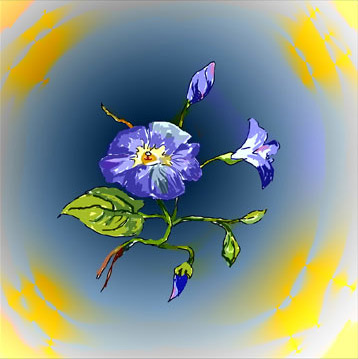
Forget-me not flowers pictures.

Forget-me-not flower is the common name given to about a dozen flowering plants in the Myosotis genus of the Borage family (Boraginaceae).
 Forget me nots grow best when planted early in spring in shady areas. They require rich, moist soil, but are otherwise easy to maintain throughout their lifespan, and � in fact � are thought to be relatively free of pests and diseases.
 The most recognizable forms of this flower contain 5-petalled, flat heads that may appear in either light blue or purple. 
 The forget me not flower has accumulated a good deal of legend over time. One of the best known legends is of how it got its distinctive name. It is said that a medieval knight walked near a riverbank with his beloved. As they walked, he slipped into the water and could not get out because of the weight of his armour. As his love wept and tried to pull him from the water, he handed her a bouquet of small, blue flowers and whispered, �forget me not.� 
 These flowers have also been mentioned in many folkloric tales that stated they had a curative effect on scorpion stings, and thus they were called �scorpion grass.� In other stories they were said to be used as protective talismans against witches, and lucky emblems to the likes of King Henry IV of England � who adopted this flower as his personal good luck charm. Aside from being a fortuitous symbol, the forget me not flower is also occasionally used by herbalists. Teas are sometimes made from dried forget me nots not only for its pleasant, slightly earthy flavour, but also because it is said to be soothing to the nerves, promote better sleep, better skin and even weight loss.
As a gift, the forget me not flower � as its name implies � is given in remembrance. It is not uncommon for these plants to be received by the family members and friends of someone who has recently passed away. On the lighter side, they are also occasionally given out by companies as a unique way to remind customers of their brand. As well as being a symbol for remembrance and luck, these flowers are also representative of true, faithful love, fond memories and hope, and are quite commonly seen in arrangements that can be given to loved ones and friends.

Friday, April 27, 2012

Honeysuckle- flowers pictures.


Honeysuckle- flowers pictures.The honeysuckle flower is a family of climbing plants and flowering shrubs. Although other types of flowers � such as the azalea and columbine � are sometimes called honeysuckles, only the group of 180 species in the lonicera genus are considered true honeysuckle flowers. This plant, which is a member of the caprifoliaceae family, is native to many regions of the Northern Hemisphere; however, the majority of species can be seen blooming both wild and in gardens all throughout China. The leaves of the honeysuckle flower are opposite and rounded, and may be either evergreen or deciduous. The flowers themselves are set in a distinctive bell shape, and bloom in dual shades � from scarlet red on the outside and bright orange on the inside, to white tinged with a rosy pink. One characteristic feature of this flower is its fruit, which adds an extra dash of bright color to its appearance.
The honeysuckle flower � whose scientific name is derived from the well known Renaissance botanist, Adam Lonicer � has made its mark in popular culture. One such example is a painting by the famous artist Peter Paul Rubens. This painting, entitled �Honeysuckle Bower,� is a double portrait of himself and his new wife sitting under the shelter of a blossoming honeysuckle shrub. More modern artists, such as Joni Johnson-Godsy and Poppy Melia, have also depicted this striking flower in a variety of forms. As well as being noted in fine art, the honeysuckle flower has become the inspiration for a good deal of films, music and literary art. Honeysuckles have appeared in stories and poetry from writers such as William Faulkner, Marie de France and Robert Frost. In addition to being a cultural icon of sorts, the honeysuckle is also considered highly effective in herbal cures and cosmetic treatments. Honeysuckle extracts are frequently used in perfumes, face creams and occasionally even toothpaste. As a curative, this blossom is considered very effective for respiratory issues, clearing the body of toxins and reducing fevers.
One of the honeysuckle�s most prominent symbols is the bond of love. This flower has long been associated with not only love, but devotion and generosity. These blossoms are sometimes given as an alternative to the more common flowers, and are often presented to the recipient on Valentine�s Day, anniversaries, as wedding gifts, or even simple tokens of affection. As well as giving this plant in an arrangement, bouquet or pot, you can also place them in a gift basket featuring other honeysuckle-related items, such as teas, perfumes and soaps.

Flowers sketches.


Flowers sketches.